
Summary:
“Wondering if that deep cut needs professional medical attention? From gaping edges to persistent bleeding, learning the crucial warning signs can help you decide when to seek laceration repair urgent care to avoid severe infections and permanent scarring.”
Accidents happen when we least expect them, and the panic of getting a sudden, deep cut is something most of us have experienced. In the heat of the moment, the immediate question that races through your mind is, “Does my cut need stitches?” It can be tough to evaluate your own injury while trying to stop the bleeding, but knowing the difference between a minor scrape and a severe laceration is absolutely critical. Timely laceration repair urgent care helps prevent dangerous bacterial infections, minimizes cosmetic scarring, and speeds up your body’s natural healing process. Let’s walk through the definitive signs that your cut requires medical attention and exactly what you should do next.
How Do I Know if My Cut Needs Stitches? (Key Indicators)
When you are staring at a fresh wound, the adrenaline can make it difficult to assess the severity of the situation. Medical professionals use a specific set of criteria to determine if a cut needs stitches. Here are the primary indicators you should look for:
- The Depth and Size of the Cut
The most obvious sign that your cut needs stitches is its physical size. As a general rule of thumb, if your cut is deeper than 1/4 inch (about 6 millimeters) or longer than 1/2 inch, it will likely require professional closure. Take a close look inside the wound. If you can see yellow fatty tissue, dark red muscle, or even bone, you need to head to an urgent care clinic immediately. Stitches are necessary to pull these deep layers back together so they can heal properly from the inside out.
- Gaping or Separated Edges
Even if a cut doesn’t look incredibly deep, the behavior of the skin edges is a major clue. If the edges of the cut pull apart and do not naturally fall together, it needs medical attention. Gaping wounds that are left to heal on their own will heal from the bottom up, which takes significantly longer and results in a wide, highly visible scar. Stitches act as a bridge, pulling the skin edges flush against each other for a seamless repair.
- Bleeding That Will Not Stop
A minor cut will usually stop bleeding within a few minutes. However, if your cut continues to bleed heavily after 10 to 15 minutes of continuous, direct pressure, it is a clear sign that a larger blood vessel may have been severed. In this scenario, do not keep checking the wound every few seconds—apply firm pressure with a sterile gauze or clean cloth and maintain it. If blood rapidly soaks through the material, you need to visit a clinic or consider whether it’s a situation for urgent care vs. the emergency room.
- The Location Matters
Where the cut is located on your body plays a massive role in deciding whether you need stitches. High-tension areas, such as joints (knees, elbows, knuckles), are constantly moving. Every time you bend that joint, the wound will pull open, delaying the healing process and increasing the risk of infection. Stitches anchor the skin in place despite the movement. Additionally, cuts on cosmetically sensitive areas like the face, lips, or eyelids should always be evaluated by a medical professional to ensure minimal scarring.
When Are the Signs a Cut Needs Medical Attention Immediately?
Sometimes the necessity for medical care goes beyond just the physical dimensions of the cut. The circumstances surrounding the injury can introduce severe risks that require immediate evaluation.
- The Source of the Injury
Not all cuts are created equal. If your injury was caused by an animal bite or a human bite, you must seek medical attention. Animal mouths harbor dangerous bacteria, and bites have a notoriously high infection rate. Similarly, if you were cut by a rusty nail, a piece of dirty metal, or an object contaminated with soil, you are at a high risk for Tetanus. If it has been more than five years since your last tetanus shot booster, a medical professional will need to administer one.
- Deeply Embedded Objects
Puncture wounds like stepping on a nail or getting stabbed by a piece of glass often leave debris behind. If you have glass, wood splinters, or metal embedded deeply in the tissue, do not attempt to dig it out yourself. Trying to remove an embedded object at home can cause severe nerve damage, tear blood vessels, or push the debris further in. An urgent care doctor has the tools to safely numb the area, extract the object, and thoroughly irrigate the wound.
- Numbness or Tingling Sensations
If you experience numbness, tingling, or an inability to move the affected finger, toe, or limb, you have likely damaged an underlying nerve or tendon. This elevates the injury from a simple skin laceration to a complex wound that requires immediate professional assessment to preserve your long-term mobility and sensation.
- Early Signs of Wound Infection
While infections usually develop over a few days, if you delayed seeking care and now notice red streaks radiating from the wound, localized warmth, excessive swelling, throbbing pain, or foul-smelling pus, you need antibiotics and professional wound care right away.
Why is Prompt Laceration Repair Urgent Care Crucial?
When dealing with a significant cut, time is of the essence. Many people try to tough it out, only to visit a doctor days later when complications arise. Here is why you should act quickly:
- The “Golden Window” of Treatment
Medical professionals refer to the first 6 to 8 hours after an injury as the “golden window.” Wounds closed within this timeframe have a drastically reduced risk of bacterial infection. If you wait longer than 8 to 12 hours (or 24 hours for facial cuts), many doctors will refuse to stitch the wound closed because doing so would trap rapidly multiplying bacteria inside, leading to a severe abscess. Instead, they must leave the wound open to heal from the bottom up—a long, painful process.
- Minimizing Cosmetic Scarring
A clean, professionally sutured wound will heal with a thin, flat line. Conversely, a gaping wound left to its own devices will fill in with thick, fibrous scar tissue, resulting in a wide, raised, and often darker scar.
- Faster Healing Process
Medical closure protects the vulnerable underlying tissues from environmental contaminants. By sealing the barrier, your body’s immune system doesn’t have to work as hard to fight off external threats, allowing it to dedicate its energy to tissue regeneration.
Immediate First Aid: What to Do Before Visiting the Clinic
If you have determined that your cut likely needs stitches, taking the right first aid steps before you arrive at the clinic can make a significant difference.
- Apply Direct Pressure: Use sterile gauze or a clean, dry cloth to apply firm pressure to the wound.
- Elevate the Injury: If the cut is on your arm or leg, prop it up above the level of your heart. Gravity will help slow the blood flow to the area.
- Clean Gently: Rinse the cut gently under cool tap water to flush out loose dirt. Use a mild soap around the outside of the wound.
- Avoid Harsh Chemicals: Do not pour hydrogen peroxide, rubbing alcohol, or iodine directly into the open cut. While this is a common at-home remedy, these harsh chemicals actually destroy healthy tissue cells and delay the healing process.
- Do Not Apply Ointment: Avoid slathering the wound in antibiotic ointment before visiting the doctor. Ointments create a greasy seal that makes it much harder for the medical professional to properly clean, assess, and glue or stitch the skin.
What to Expect During Laceration Repair (A Fresh Perspective)
The thought of getting stitches can be anxiety-inducing, especially for children or those with a fear of needles. However, modern urgent care clinics make the process as painless and efficient as possible.
Will It Hurt?
The most common fear is the pain of the procedure. Before any suturing begins, the doctor will use a local anesthetic (usually lidocaine) to completely numb the area. You will feel a quick pinch and a slight burning sensation as the medicine goes in, but after that, the area goes numb. During the repair, you will only feel pressure and tugging no sharp pain.
Modern Alternatives to Traditional Stitches
Stitches are not the only tool in a doctor’s kit. Depending on the size, location, and tension of your cut, the provider might opt for modern, less invasive closures:
- Skin Glue (Dermabond): For straight, clean cuts that are not under high tension (like on the forehead), doctors often use a medical-grade skin adhesive. It is fast, painless, and naturally sloughs off as the wound heals meaning no follow-up visit for removal.
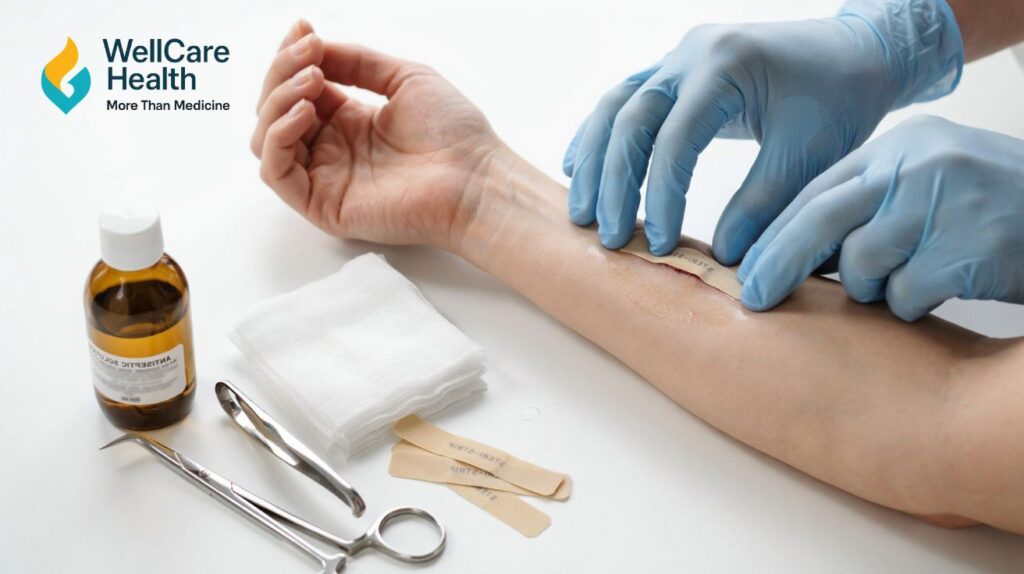
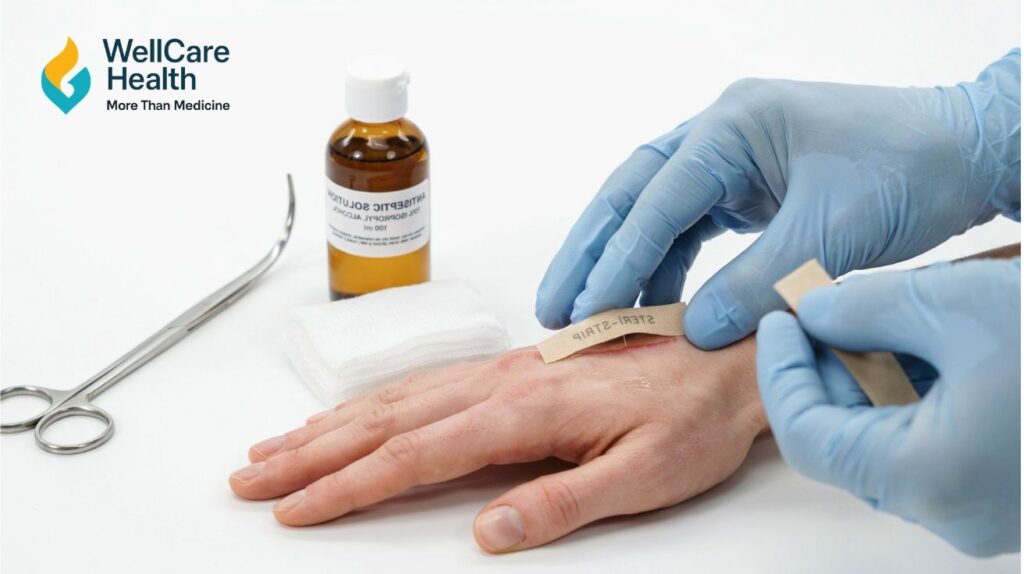
- Steri-Strips: These are strong, butterfly-like adhesive strips used to hold the edges of small, shallow cuts together.
- Staples: Often used for thick skin, particularly on the scalp, staples are fast to apply and highly effective for certain lacerations.
How to Care for Your Stitches at Home
Once you leave the clinic, the responsibility for proper healing falls on your shoulders. Excellent aftercare is the key to preventing infection and minimizing scars.
- Keep it Dry: You will usually be instructed to keep the stitched area completely dry for the first 24 to 48 hours. After that, you can gently wash it with soap and water, but do not soak it in a bath or swimming pool.
- Apply Ointment as Directed: Your doctor may advise applying a thin layer of antibiotic ointment or petroleum jelly to keep the scab from drying out and cracking.
- Watch for Infection: Keep an eye out for increased redness, swelling, or yellow discharge.
- Safe Removal: Never try to remove stitches yourself. Return to the clinic on the scheduled date (usually 5 to 14 days, depending on the location) for safe, sterile removal. Leaving them in too long can cause “railroad track” scarring.
Visit Well Care Center in Chicago for Immediate Care
Delaying care for a severe cut only increases your risk of infection, prolonged bleeding, and permanent scarring. If you are experiencing any of the signs a cut needs medical attention, do not wait. Well Care Center provides prompt, compassionate, and expert laceration repair.
Walk into our clinic today or view us location and hours to get the immediate care you deserve. For non-emergencies or general questions, feel free to contact us. Your health and comfort are our top priorities!