
Summary
“Deciding between urgent care and primary care can be confusing, especially when you need immediate help. This comprehensive guide breaks down the differences, costs, and symptoms, helping Chicago residents make the smartest healthcare choices while highlighting Well Care Center’s integrated approach.”
You wake up with a burning sore throat on a Tuesday morning, or perhaps you twist your ankle on a deep pothole while rushing down a busy Chicago street. Where exactly do you go for help? The widespread confusion between Primary Care Providers (PCP), Urgent Care clinics, and Emergency Rooms (ER) often leads patients to make decisions that cost them unnecessary time and money.
Navigating the modern healthcare system doesn’t have to be a stressful guessing game when you’re already in pain. This complete guide provides a clear, definitive roadmap to making the right choice for your health and your wallet, featuring Well Care Center’s unique, integrated approach to both immediate and long-term care.
Why Is It Important to Know the Difference?
Choosing the correct medical facility when you are injured or feeling ill is more than just a matter of logistical convenience it has a massive impact on your finances, your time, and the overall efficiency of the city’s healthcare infrastructure. According to recent industry studies, up to 48% of adult Emergency Room visits are for medical issues that could have been effectively and safely treated at a primary care office or an urgent care center.
When you rush to the ER for a non-life-threatening issue like a mild sprain or a sinus infection, you are typically met with exorbitant out-of-pocket costs and sky-high co-pays. Furthermore, emergency rooms operate on a triage system, meaning they treat the most severe, life-threatening cases first. If you arrive with a minor ailment, you could find yourself sitting in a crowded, stressful waiting room for several hours while major traumas are prioritized.
Conversely, choosing a walk-in urgent care clinic or scheduling a same-day appointment with your primary care doctor saves you hundreds, if not thousands, of dollars. It also performs a vital public service: it keeps emergency room beds open and emergency medical staff available for those experiencing true, life-or-death crises, such as heart attacks or severe car accidents. Knowing exactly when to utilize preventive care versus when to seek acute, rapid intervention allows you to navigate the healthcare system efficiently and responsibly.
When Should You Visit a Primary Care Doctor?
Your Primary Care Provider (PCP) should be viewed as the dedicated “quarterback” of your overall health and wellness. While urgent care handles sudden, immediate issues, your primary care doctor is focused on the long game. They look at your entire medical history, your family background, your lifestyle, and your specific risk factors to build a customized healthcare roadmap.
Core Services Provided by Primary Care:
Annual Physicals and Check-ups: These routine visits are the foundation of preventive care. They allow your doctor to establish your healthy baseline.
Preventive Screenings: Depending on your age and gender, your PCP manages screenings for cholesterol, diabetes, blood pressure, and various cancers.
Chronic Condition Management: If you live with long-term health issues like hypertension (high blood pressure), asthma, arthritis, or diabetes, your primary care doctor is the one who continually monitors your progress and adjusts your treatment.
Medication Management: Your PCP oversees your daily prescriptions, ensuring there are no adverse interactions between medications.
Specialist Referrals: If you need to see a cardiologist or a dermatologist, your PCP serves as the gateway, providing the necessary referrals and coordinating with those specialists.
The most critical advantage of having a dedicated primary care doctor in Chicago is the relationship-building aspect. Because your PCP sees you year after year, they know your baseline health intimately. This makes it significantly easier for them to spot subtle, early changes in your health that a new doctor might miss. They understand your normal baseline, making deviations much easier to diagnose and treat before they become serious problems.
When Is Urgent Care the Right Choice in Chicago?
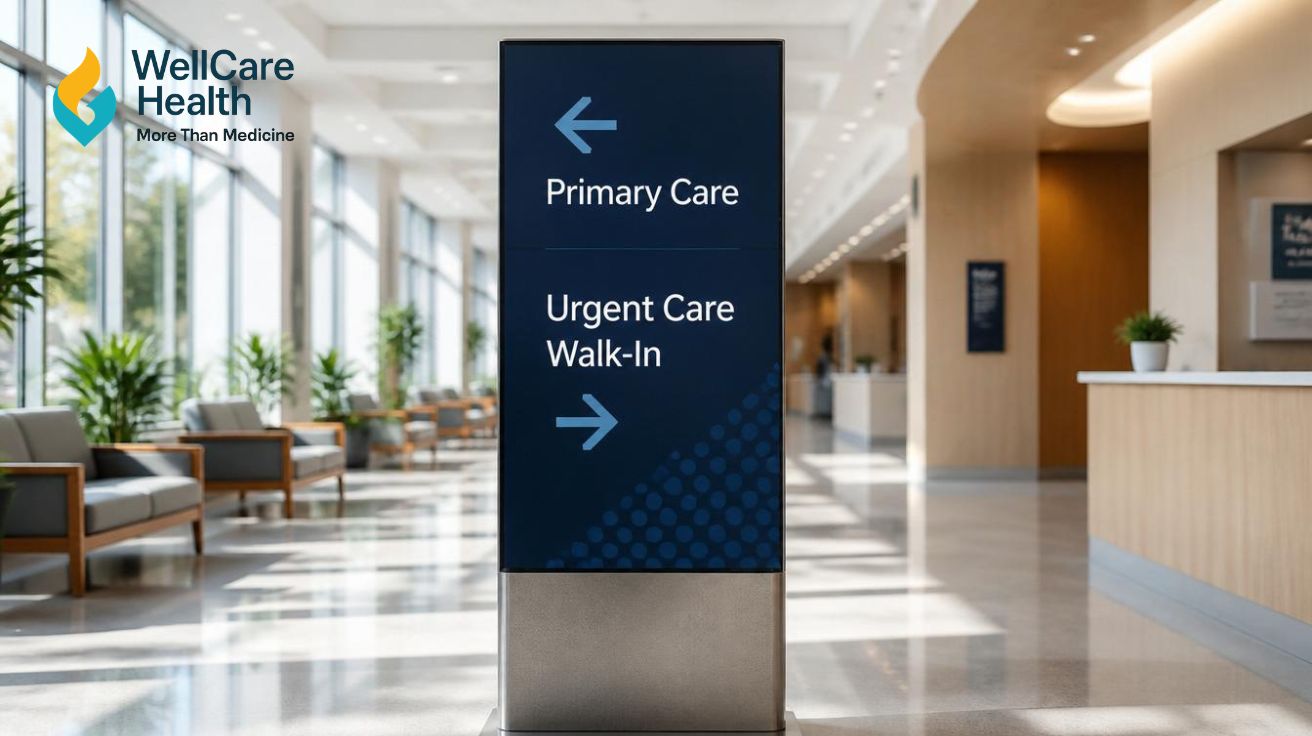
Urgent care clinics bridge the critical gap between your primary care doctor’s standard office hours and the intensive, high-cost environment of an emergency room. Urgent care is specifically designed for acute, non-life-threatening medical issues that require prompt attention—usually within 24 hours—but are not severe enough to warrant an ER visit.
For the fast-paced lifestyle of Chicago professionals, students, and families, the convenience of walk-in clinics with extended evening and weekend hours is invaluable. When your primary care doctor is booked solid or closed for the weekend, urgent care steps in as your medical safety net.
Common Reasons to Visit an Urgent Care Clinic:
Minor Injuries: Sprains, strains, and minor fractures (like a suspected broken finger or toe).
Lacerations: Minor cuts that may require a few stitches but do not involve uncontrollable bleeding or deep tissue damage.
Infections: Urinary tract infections (UTIs), pink eye, ear infections, and severe sinus infections.
Respiratory Illnesses: Flu symptoms, strep throat, severe coughs, and bronchitis.
Skin Conditions: Sudden rashes, insect bites, or minor allergic reactions (that do not impede breathing).
Diagnostic Needs: Quick access to basic X-rays and rapid lab testing (like strep, flu, or COVID-19 tests).
Urgent care provides immediate peace of mind without the excessive waiting times and financial shock associated with hospital emergency departments.
How Do I Decide Between Urgent Care and the ER?
Making the right call in a moment of panic can be difficult. The simplest way to remember the distinction is this: Urgent Care handles the “I need a doctor today, but I am not dying” situations. The Emergency Room is strictly for situations where life, limb, or vision is immediately threatened.
To make this decision as clear as possible, use the following quick-reference checklist.
Healthcare Decision Matrix: Where to Go
|
Symptom or Medical Issue |
Primary Care (PCP) |
Urgent Care |
Emergency Room (ER) |
|
Routine check-up or physical |
Yes |
No |
No |
|
Managing chronic diabetes |
Yes |
No |
No |
|
Sprained ankle from running |
No |
Yes |
No |
|
Painful urination (suspected UTI) |
Yes |
Yes |
No |
|
Need a few stitches for a kitchen cut |
No |
Yes |
No |
|
Sudden, crushing chest pain |
No |
No |
Yes |
|
Drooping face or sudden numbness |
No |
No |
Yes |
|
Uncontrollable, heavy bleeding |
No |
No |
Yes |
|
Difficulty breathing / gasping for air |
No |
No |
Yes |
If you ever experience symptoms of a heart attack (chest pressure, pain radiating down the arm) or a stroke (slurred speech, sudden weakness on one side of the body), do not drive to an urgent care clinic. Call 911 immediately.
How Well Care Center Combines Both for Seamless Care
The biggest frustration patients face in the modern medical landscape is fragmented, siloed healthcare. You might visit a random urgent care clinic on the North Side for a sprained wrist, but when you follow up with your primary care doctor three weeks later, they have no idea what happened because the records were never shared. You are forced to explain your symptoms, treatments, and X-ray results all over again.
Well Care Center completely eliminates this frustration by offering a uniquely integrated approach: providing both urgent care and primary care under one roof.
“The golden rule of healthcare is continuity. Urgent care is your safety net for life’s sudden curveballs, but your primary care doctor is your long-term health architect. The magic happens when both teams share the same electronic health record and the same goal: your overall wellness.” — Well Care Center Medical Professional
The “Under One Roof” Advantage: When you utilize Well Care Center for your healthcare needs, you benefit from a completely unified medical record. If you come into our walk-in clinic on a Sunday evening for a severe sinus infection, the urgent care physician will treat you immediately. When you return a month later for your annual physical with your Well Care Center primary care doctor, that doctor already has the notes from your urgent care visit. They can see exactly what antibiotics were prescribed, how you responded, and if any follow-up is necessary.
This seamless transition of information ensures perfect continuity of care. It prevents medication errors, stops you from having to repeat your medical history endlessly, and creates a comprehensive, holistic view of your health that isolated clinics simply cannot provide.
Frequently Asked Questions
Navigating urgent care vs primary care Chicago options often brings up a few common questions. Here are clear answers to help you understand your choices.
Do I need an appointment for urgent care?
No! The defining feature of an urgent care clinic is the walk-in protocol. You do not need an appointment to be seen by a doctor. You simply arrive during operating hours, register at the front desk, and are typically seen in a fraction of the time it would take at an ER. However, for primary care visits (like annual physicals), you do need to schedule an appointment in advance.
Can an urgent care doctor prescribe medication?
Yes, urgent care physicians are fully licensed medical doctors or advanced practitioners (like Nurse Practitioners or Physician Assistants). They can assess your condition and prescribe necessary short-term medications, such as antibiotics for an infection, short-term pain relief for an injury, or inhalers for acute asthma exacerbations. However, urgent care doctors generally do not prescribe long-term maintenance medications for chronic conditions—that is the explicit role of your primary care doctor.
Can I use urgent care if I don’t have a primary care doctor?
Absolutely. Urgent care clinics are open to the public regardless of whether you have an established PCP. In fact, visiting Well Care Center for an urgent, immediate need is a fantastic stepping stone. Once your immediate issue is resolved, our staff can easily help you transition into our primary care system, allowing you to establish a long-term medical home with a doctor you already trust.
Take Control of Your Health at Well Care Center
Whether you need a comprehensive annual physical to maintain your long-term wellness or a quick fix for a sprained ankle sustained on a brisk Chicago afternoon, knowing exactly where to go gives you ultimate peace of mind. By understanding the distinct roles of primary care, urgent care, and the emergency room, you protect your health, save valuable time, and avoid unnecessary medical bills.
Don’t wait until you are sick or injured to figure out your healthcare plan. Establish your primary care home or utilize our convenient walk-in Chicago clinics today at Well Care Center. Experience the unmatched benefit of having your immediate and long-term medical needs seamlessly integrated under one roof. Book your primary care appointment online or walk in for immediate care your health is our priority.